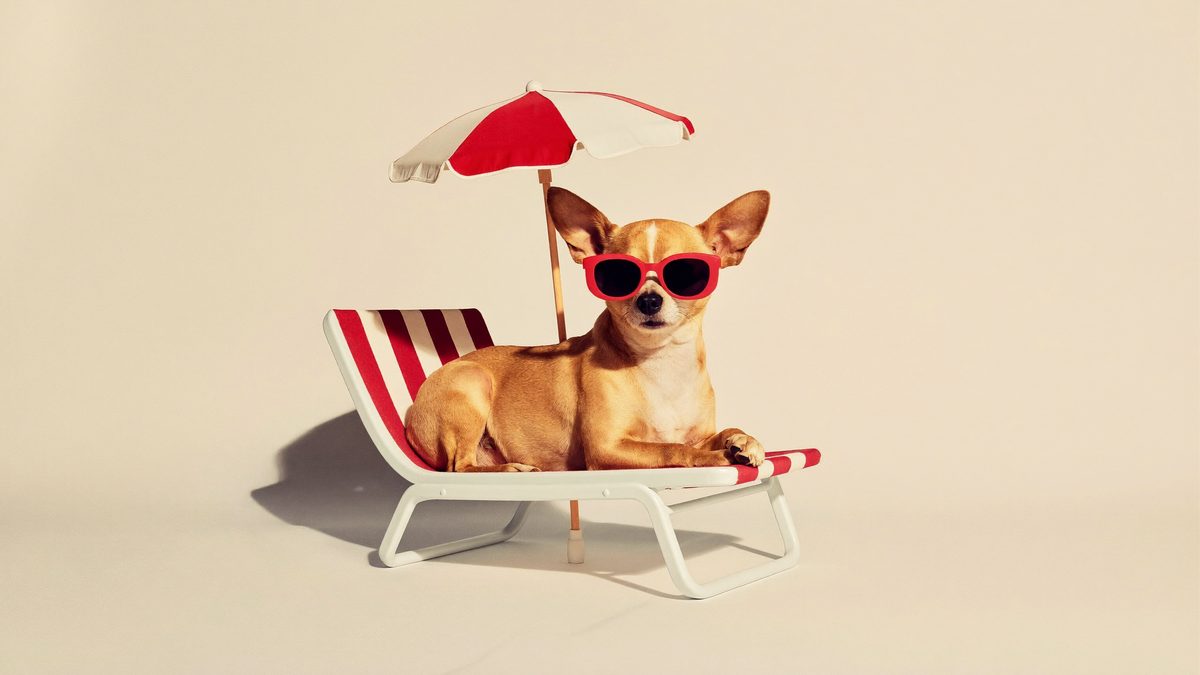
If you live in Miami, you already know the deal: it's hot, it's humid, and it doesn't really stop. We don't get one tough month a year — we get warm, sticky weather for most of it. For some dogs, that's no problem at all. For others, it's a genuine health risk. The good news is that with a little know-how, every dog can stay safe and happy here.
We've cared for Miami's dogs for more than 55 years, and we've watched thousands of them play through summer afternoons. This guide breaks down which breeds tend to handle the heat with ease, which ones need a bit more care, and the simple steps that keep any dog cool — no fear-mongering, just practical advice from people who do this every day.
In this guide
Why heat hits some breeds harder
Dogs don't sweat through their skin the way we do. They cool themselves mainly by panting — moving air over a wet tongue and airway to shed heat — plus a little sweating through their paw pads. That system works beautifully for some dogs and poorly for others, and a handful of traits make all the difference:
- Short noses (brachycephalic breeds). Flat-faced dogs like Bulldogs and Pugs have compressed airways. They simply can't pant efficiently, so heat builds up far faster than in a long-nosed dog.
- Thick double coats. Breeds built for cold climates carry a dense undercoat that traps body heat. Wonderful in the snow, working overtime in Miami.
- Dark coats. A black or deep-brown coat absorbs more sun, the same way a dark T-shirt does on a beach day.
- Very large or heavy dogs. Giant breeds and overweight dogs generate and hold more body heat, and have a harder time shedding it.
- The very young, the very old, and the overweight. Puppies, senior dogs and dogs carrying extra pounds all regulate temperature less effectively, no matter the breed.
Most dogs fall somewhere on a spectrum. Knowing where yours sits is the first step to keeping them comfortable through a Miami summer.
Breeds that handle Miami heat well
These breeds tend to be lean, short-coated and long-nosed — the build that pants efficiently and sheds heat with ease. If you share your home with one of these, you've got a natural-born Floridian. (They still need shade and water, but they're working with the climate, not against it.)
| Breed | Why they cope so well |
|---|---|
| Chihuahua | Tiny, short-coated and originally from the deserts of Mexico; heat is in their DNA. |
| Italian Greyhound | Featherweight build and a whisper-thin coat shed heat almost instantly. |
| Whippet | Lean, long-nosed and sleek; designed to run, with very little coat to trap warmth. |
| Dalmatian | Short single coat and athletic frame; a classic warm-weather companion. |
| Vizsla | A sleek Hungarian pointer with a thin coat that loves activity in warmth. |
| German Shorthaired Pointer | Short-coated, fit and built for long days outdoors. |
| Doberman Pinscher | A thin, short coat (just mind the dark color) over a powerful, efficient body. |
| Basenji | An African breed with a fine coat and almost cat-like tidiness; very heat-tolerant. |
| Xoloitzcuintli (Mexican Hairless) | Little to no coat at all; just protect that bare skin from sunburn. |
| Miniature Pinscher | Small, sleek and lively, with a low-maintenance short coat. |
| American Water Spaniel | A water-loving breed that genuinely enjoys cooling off on a hot day. |
Notice the pattern: lean bodies, short coats, efficient pants. Even so, "heat-tolerant" never means "heat-proof" — these dogs still need fresh water, shade and a break from the midday sun like everyone else.
Breeds that struggle in the heat (and need extra care)
Let's be clear up front: plenty of these dogs live wonderful lives in Miami. They just need their humans to be a little more thoughtful. If you love one of these breeds, you don't need to panic — you need a plan. Here's who to watch, and how to help.
Flat-faced (brachycephalic) breeds
This is the group that needs the most attention in our climate. Because of their short airways, they overheat quickly and quietly — sometimes before owners realize anything's wrong.
| Breed | What to watch |
|---|---|
| English Bulldog | Among the most heat-sensitive dogs anywhere — strict AC at midday and only short, shaded outings. |
| French Bulldog | Overheats quickly and quietly; walk in the early morning or evening and skip midday play. |
| Pug | Compressed airways make panting inefficient; watch the breathing on every warm outing. |
| Boston Terrier | Handles heat a bit better than other flat faces, but still needs AC and cool-hour walks. |
| Boxer | Athletic and eager to please — which makes it easy to overdo it; enforce water breaks. |
| Shih Tzu | Short nose plus a long coat; keep them brushed, trimmed and indoors at midday. |
| Pekingese | Heavy coat and a very flat face; treat every hot-weather outing as a short one. |
How to help: keep them in air conditioning during the hottest part of the day, walk only in the cool early morning or late evening, never push exercise in the heat, and skip the midday play sessions. Carry water on every outing and head home at the first sign of heavy panting. With these adjustments, a flat-faced dog can absolutely thrive here.
Thick or double-coated breeds
These are the cold-weather breeds, built with a dense undercoat that insulates against winter — and, unfortunately, against a Miami July.
| Breed | What to watch |
|---|---|
| Siberian Husky | Built for snow; brush out the undercoat often and schedule play for the coolest hours. |
| Alaskan Malamute | One of the thickest coats around; needs AC, shade and a slower summer pace. |
| Chow Chow | Dense coat and famously low heat tolerance; keep outings brief and water close. |
| Bernese Mountain Dog | A big mountain dog in a beach town; morning walks, air-conditioned afternoons. |
| Newfoundland | Giant size plus a heavy coat; a kiddie pool or damp towel to lie on is a real treat. |
| Samoyed | That white cloud of fur insulates both ways; brush it out and stick to the shade. |
| Saint Bernard | An alpine breed at heart; short, early outings and plenty of indoor rest. |
How to help: brush out the loose undercoat regularly so air can circulate (but never shave a double coat — see below), give them constant access to shade and air conditioning, schedule exercise for the coolest hours, and offer plenty of cool water. A kiddie pool or a damp towel to lie on can be a real treat. Many of these big, fluffy dogs are perfectly content in Miami — they just live more of their summer indoors.
It's not just the breed — heat safety for every Miami dog
Breed is only part of the story. The most heat-tolerant Whippet and the fluffiest Husky both rely on the same basics. Build these habits and you protect every dog you'll ever own:
- Fresh water, always. Multiple bowls, refilled often, with a few outside in the shade. Hydration is the single best defense against overheating.
- Walk early or late. Aim for early morning or after sunset, and avoid the brutal window from about 11 a.m. to 4 p.m. — that's when pavement and air are at their worst.
- Never leave a dog in a parked car. Not for "just a minute," not with the windows cracked. Interiors heat to deadly levels within minutes, even on a mild day.
- Test the pavement with your hand. Press your palm to the asphalt for seven seconds. If it's too hot for you, it's too hot for paws — burns happen fast on sun-baked sidewalks.
- Provide shade and AC. Always give an outdoor dog a genuinely shaded retreat, and bring dogs inside to air conditioning on the hottest days.
- Never shave a double coat. That coat insulates against heat and shields the skin from sunburn. Shaving can make a dog hotter and damage how the fur grows back. Brush, don't shave.
Know the signs of heatstroke
Heatstroke can turn serious quickly, so it's worth knowing the warning signs: heavy or frantic panting, thick drooling, bright-red or dark gums, wobbliness or weakness, glazed eyes, vomiting, and collapse.
If you see them, treat it as an emergency. Move your dog to shade, offer cool (not ice-cold) water, wet their body and paws with cool water, and get to a vet right away. Acting fast saves lives — and most heat emergencies are entirely preventable with the habits above.
How we keep dogs cool at Canine Country Club
Miami's heat is exactly why we've built the resort the way we have. Keeping dogs comfortable in this climate isn't an afterthought for us — it's the whole point of how a Miami kennel should run.
- Shaded play yards so dogs can romp without baking in direct sun.
- Private indoor/outdoor suites that let every guest move between fresh air and cool, comfortable shelter on their own terms.
- Owners living on-site, 24/7, with eyes on every dog — so a flat-faced or double-coated guest is never left to overheat unnoticed.
- Supervised play scheduled around the cooler parts of the day, not the punishing midday hours.
- Plenty of fresh water available everywhere, refilled all day long.
Whether your dog is a heat-loving Vizsla or a fluffy Samoyed who'd rather nap in the AC, the care gets tailored to them. If you'd ever like to see how we do it, we'd love to show you around.
The one-minute heat check for any dog
Before you head out: Is there shade and water where you're going? Is it before 11 a.m. or after 4 p.m.? Did the back of your hand survive seven seconds on the pavement? Is your dog flat-faced, double-coated, senior, very young or overweight — and therefore due a shorter outing? Answer those and you've covered the essentials. When in doubt, stay in the cool and play indoors.
Frequently asked questions
What are the signs of heatstroke in dogs?
Which dog breeds handle Miami's heat best?
Are French Bulldogs and Pugs safe in Miami?
Should I shave my double-coated dog in summer?
Keep your dog cool this summer
Shaded play yards, private indoor/outdoor suites, owners on-site 24/7, and a family that has cared for Miami's dogs since 1969. Whatever breed you've got, we'll keep them comfortable. Message us to book a stay.
Keep exploring: head back to the Canine Country Club blog, brush up on the lingo with our complete dog glossary, or see our boarding, daycare & pet services on the home page.